

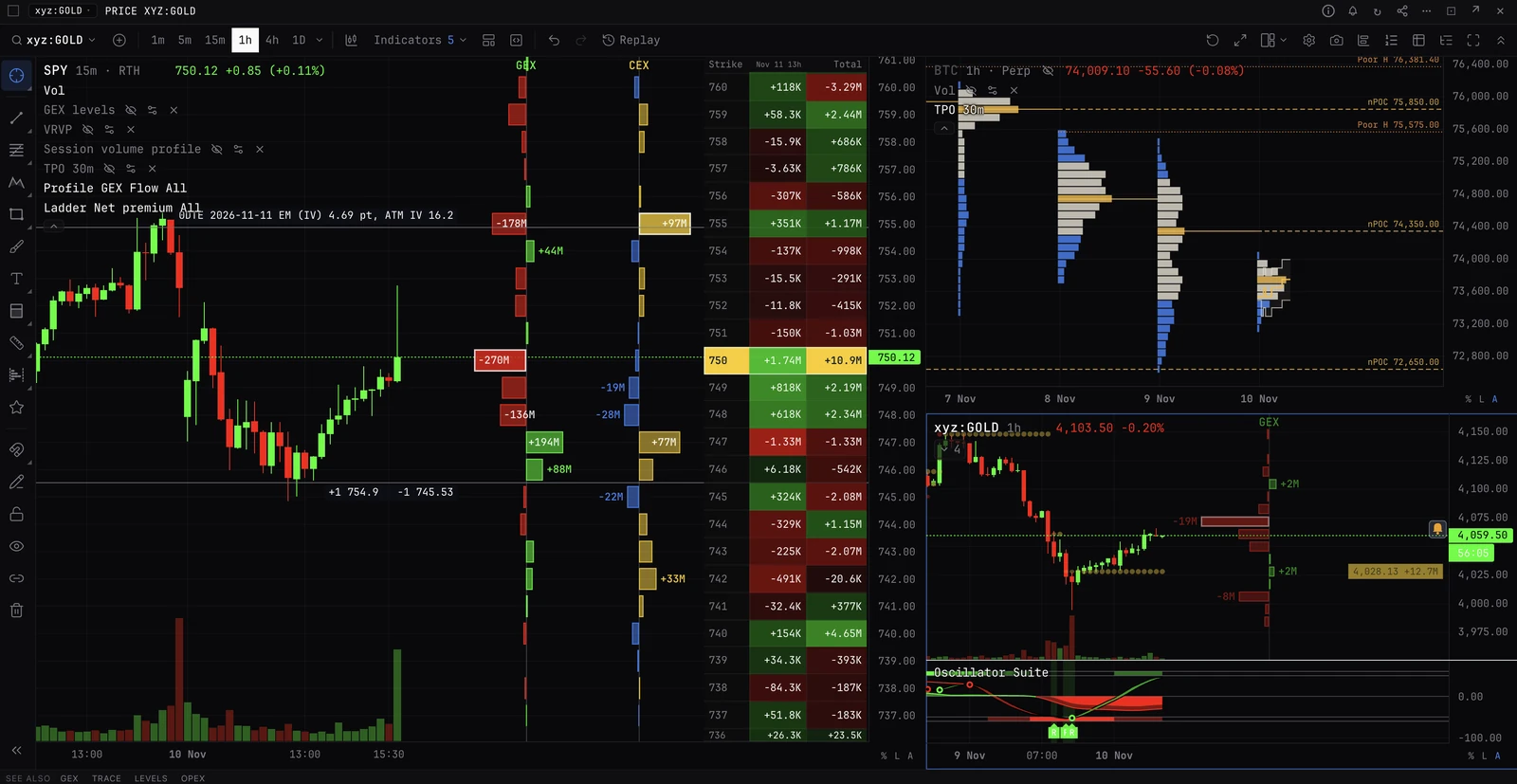
Volatility Skew
The skew term structure, one tab per view: 25 and 10 delta skew with ATM IV, the 25 delta risk reversal, the 25 delta butterfly, and the put, ATM and call IV behind them, expiry by expiry.
SKEWCrypto options (BTC, ETH, SOL, HYPE, XRP) and the 45 US options names (4 indices, 14 ETFs and 27 stocks), including SPX, SPY, QQQ and single stocks.
Typing it
SKEWSymbol[rr | fly | pillars]What you see
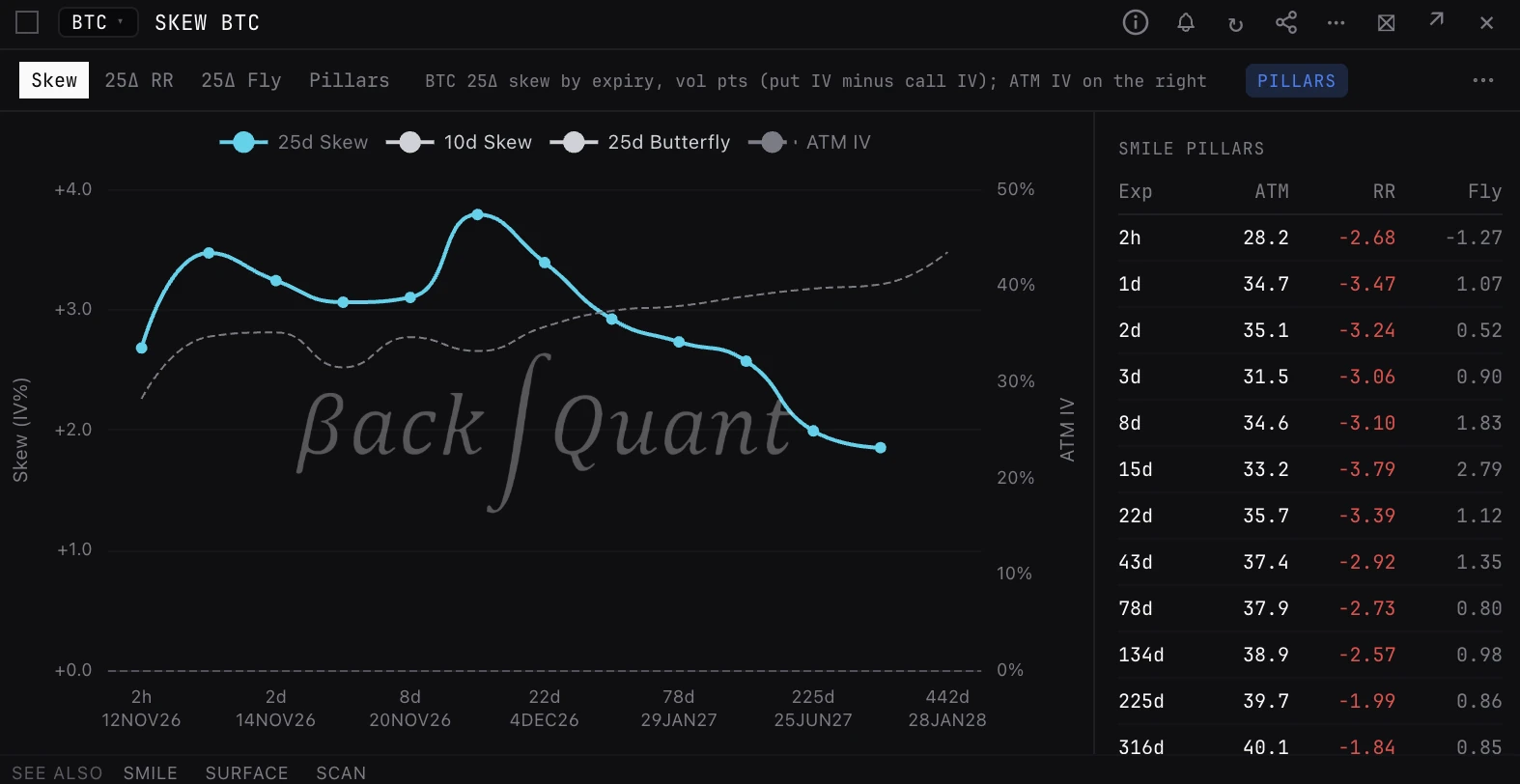
- Skew. The tab it opens on: 25d Skew (25d and 25Δ both mean 25 delta: put IV minus call IV) with ATM IV on its own right axis. 10d Skew and 25d Butterfly start hidden: click a name in the legend to show or hide a line, and the panel keeps the choice.
- 25Δ RR. The risk reversal, call IV minus put IV: the same skew with the sign flipped, as crypto desks quote it. Green bars above zero (calls rich), red below, with the 10Δ RR as a line where the data has it.
- 25Δ Fly. The butterfly: the average of 25 delta call and put IV, minus ATM IV. How far the wings stand above the middle.
- Pillars. The 25 delta put, ATM and 25 delta call IV for each expiry: the three points the skew and the fly are made of.
- PILLARS. The table toggle, not the Pillars tab. The button at the top right shows or hides a table of ATM IV, risk reversal and butterfly per expiry beside the chart. It starts open on a wide panel and closed on a narrow one.
How to read it
- Puts over calls. Downside fear premium. The normal state for equities and crypto. Skew is positive, the risk reversal negative.
- Calls over puts. An upside bid. Rare, seen in melt-ups.
- Change. Skew widening means fear is coming in. Narrowing means it is leaving.
- Fly. A rising butterfly means the market is paying for a big move either way.
What to look for
- Front expiries skewed harder than back ones: near-term tail risk is priced higher.
- Skew rising without ATM IV rising: puts are being bought without a change in overall vol. Tail hedging, not panic.
- 10 delta skew running well above 25 delta skew: the deep tail is bid harder than the wings, often forced hedging.
Tabs
- Skew
- Skew and ATM IV by expiry. The default.
- 25Δ RR
- Risk reversal by expiry. SKEW BTC rr opens on it.
- 25Δ Fly
- Butterfly by expiry. SKEW BTC fly opens on it.
- Pillars
- Put, ATM and call IV by expiry. SKEW BTC pillars opens on it.
Good to know
- Each point on the x axis is one expiry still live. On Skew, 25Δ RR and 25Δ Fly it is labelled in days (hours under a day) and by date; on Pillars in whole days.
- Crypto runs persistently put-rich. Read the change, not the sign alone.
- The panel keeps the last tab picked. Panels saved as RISKREV or BFLY open here, on the matching tab.
Also on the chart
The same data can sit on the price chart. Press / on the chart and search for:
Pairs well with
Questions
What is 25 delta skew?
The implied vol of a 25 delta put minus that of a 25 delta call. Positive means puts are richer.
How is the risk reversal different from skew?
It is the same two vols the other way round: call IV minus put IV, so negative means puts are richer. The 25Δ RR tab shows it; the Skew tab shows put minus call.
Is skew a sentiment indicator?
Often, yes. Sell-offs tend to come with widening skew and rallies with narrowing skew.