

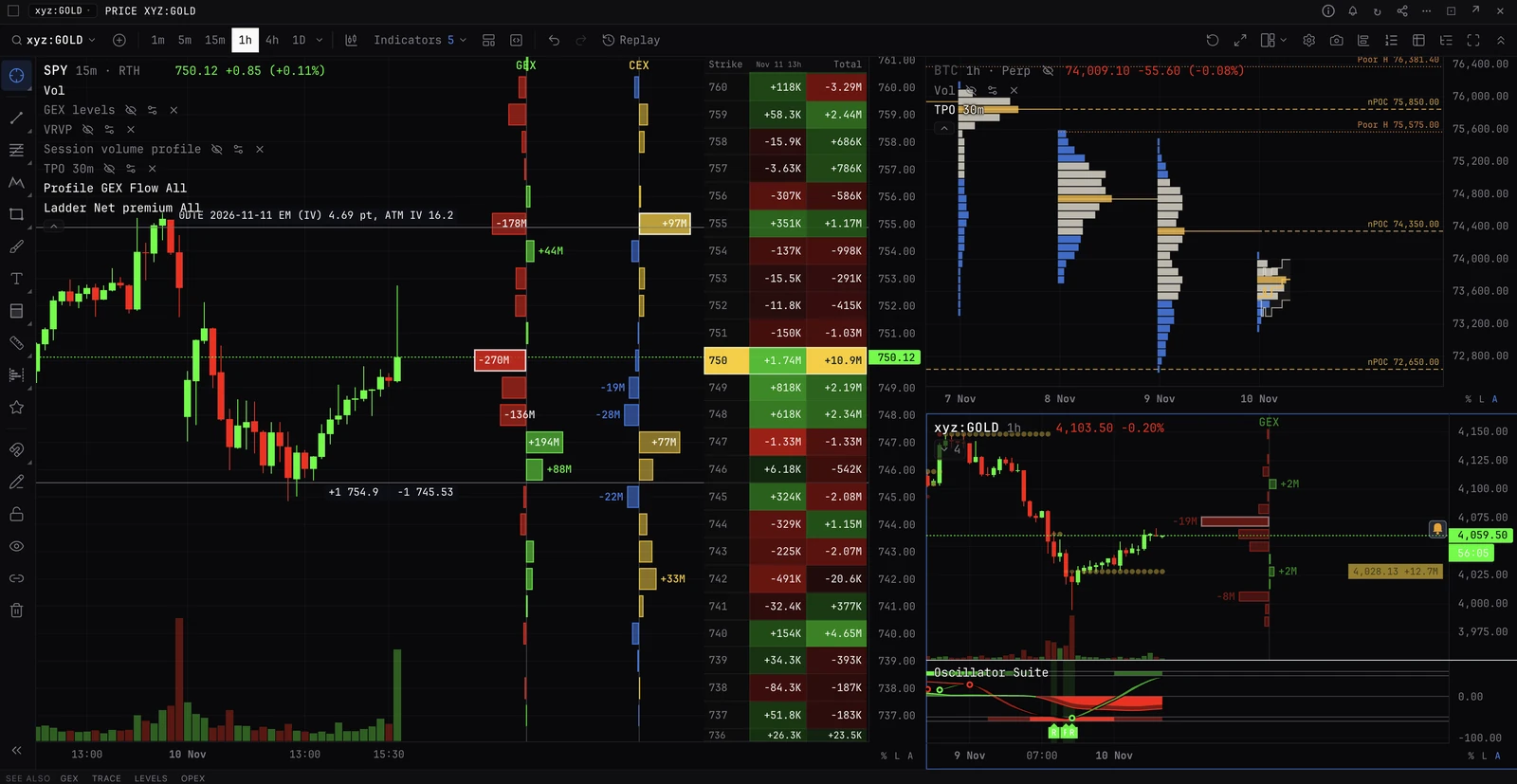
Liquidation Calculator
A calculator for leveraged positions: the liquidation price of an isolated-margin position (margin set aside for that one position), how far from entry it sits, and the margin it ties up. For how many units to trade from your stop, see POSSIZE.
LIQCALCLEVERAGELIQPRICEWorks on any numbers you type. No market data needed.
Typing it
LIQCALC>LIQCALC
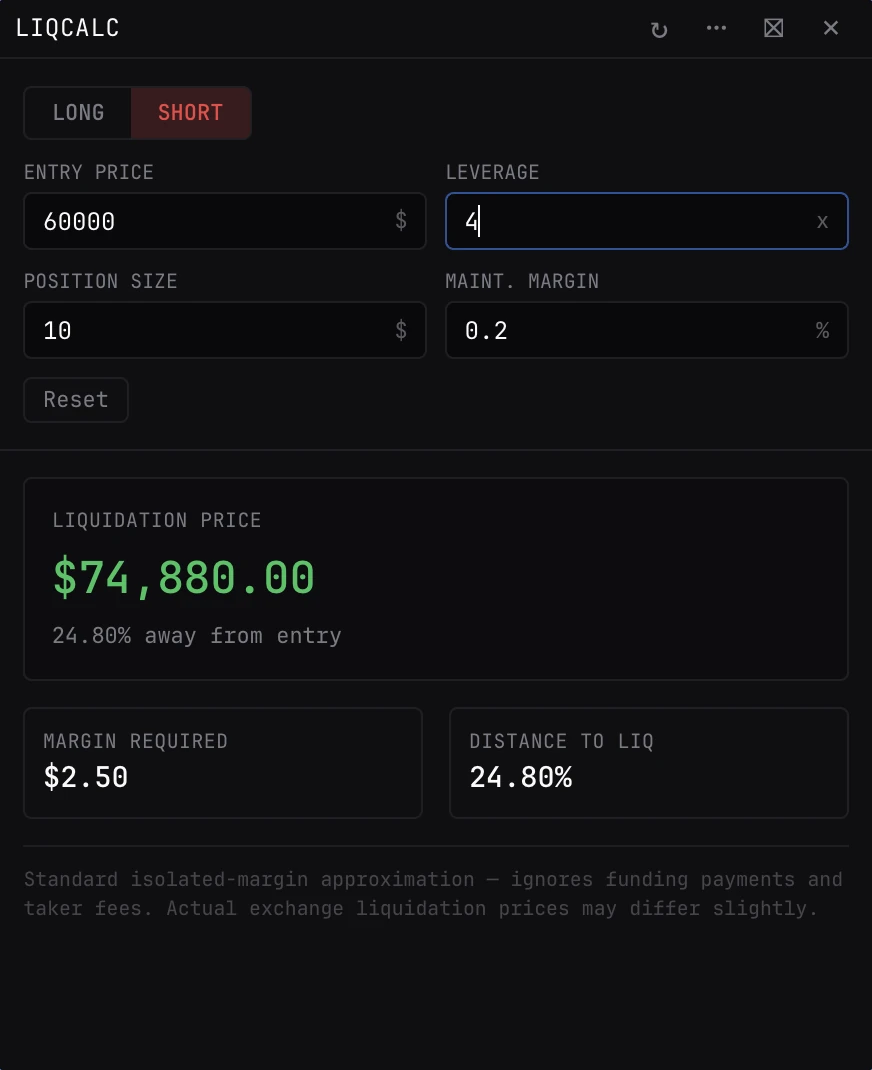
Shows a 10x long from 60,000 liquidating at 54,300, 9.5% away, on 600 of margin.
What you see
- Inputs. LONG or SHORT, Entry Price, Leverage, Notional and Maint. Margin.
- Liquidation Price. Below entry for a long, above for a short, with how far away it is in percent.
- Readouts. Margin Required and Distance to Liq.
How it works
- Formula. A long liquidates at entry × (1 - 1/leverage + maintenance margin), a short at entry × (1 + 1/leverage - maintenance margin).
- Margin. Notional over leverage.
- Leverage. More leverage puts less margin behind the same position, so a smaller move against you uses it up. When 1/leverage is not above the maintenance margin, the panel says the position would be underwater at entry.
Inputs
- LONG / SHORT
- The side. LONG is the default.
- Entry Price
- 60,000 to start.
- Leverage
- 10 to start.
- Notional
- The position size in dollars (POSSIZE's Position Size is in units). 6,000 to start.
- Maint. Margin
- The maintenance margin rate in %: the share of the position you must keep as margin, below which the exchange liquidates it. 0.5 to start.
- Reset
- Puts every field back to its starting value.
Good to know
- The standard isolated-margin approximation. It ignores funding and fees, and venues tier maintenance margin by size, so treat it as close, not exact.
Pairs well with
Questions
Why does higher leverage move my liquidation closer?
Less margin backs the same position, so a smaller move against you uses it up.
Does position size change the liquidation price?
Not here. Size sets the margin required; the liquidation price depends on entry, leverage and the maintenance rate.