

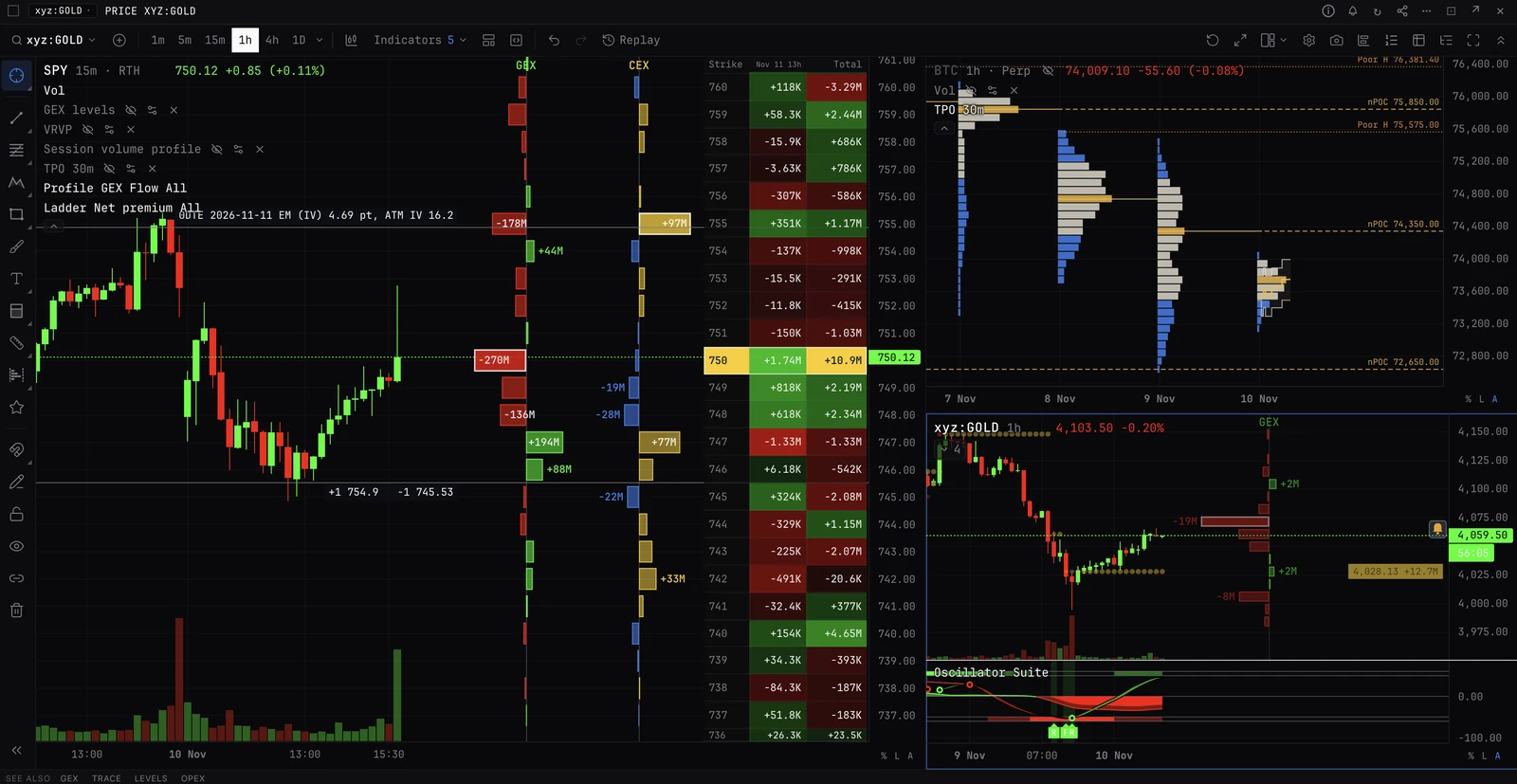
Gamma Exposure (GEX)
The aggregate dollar amount that options dealers must trade per one-percent move in the underlying. Positive GEX means dealers hedge against price (suppressing volatility). Negative GEX means dealers hedge with price (amplifying it). The single most important options-derived signal for regime classification.
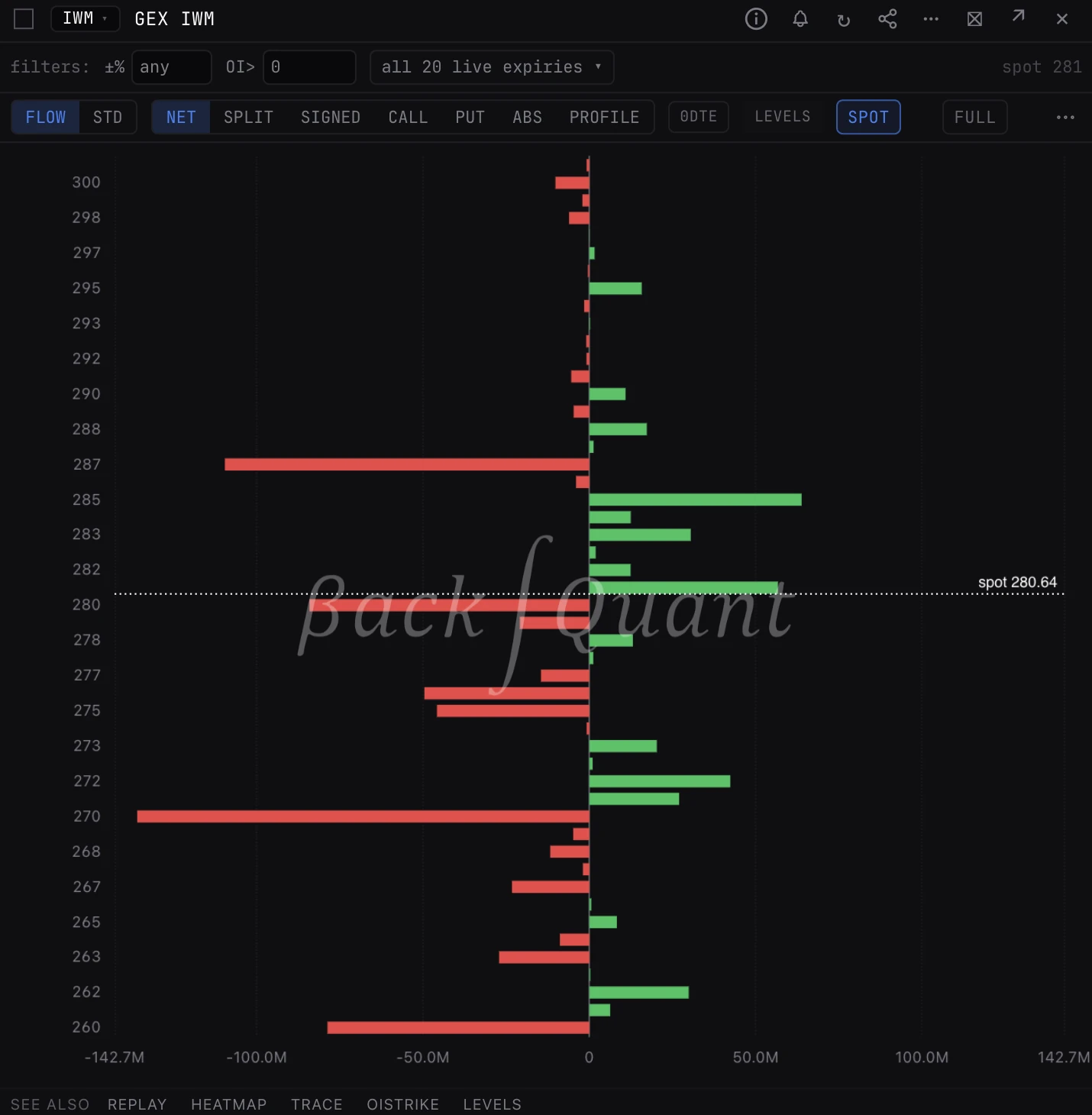
Related terms
HedgeA position taken to offset risk in another position. Long spot can be hedged by buying puts. A short call book is hedged by buying delta in the underlying. Hedging defines market-maker behaviour and is the mechanical reason gamma exposure matters.RegimeThe character of price action over a period: trending or ranging, high-vol or low-vol, positive or negative gamma. Regime classification is the single most important input to strategy selection. A signal that works in one regime often fails in another.GammaA second-order Greek measuring how much delta changes per one-dollar move in the underlying. Gamma is highest for at-the-money options near expiry. Long option positions are always long gamma; short options are short gamma. Gamma is the input to gamma exposure.Gamma FlipThe price nearest spot at which dealers' cumulative net gamma crosses from positive to negative, also labelled HVL. Above the flip, dealer hedging tends to damp moves; below it, hedging amplifies them. It is the most useful single regime boundary on a GEX chart, and it moves as open interest and spot change.Gamma RegimeWhether dealers are net long or net short gamma where price trades now. In a long gamma regime dealers buy dips and sell rallies to stay hedged, so moves are absorbed and price tends to range or pin. In a short gamma regime they sell into drops and buy into rallies, so moves extend and volatility expands. The gamma flip is the boundary between the two.
See Gamma Exposure (GEX) live on the terminal.
BackQuant is the analytics terminal for equity and crypto options. GEX walls, dealer positioning, options flow, and the full derivatives context - one product.