

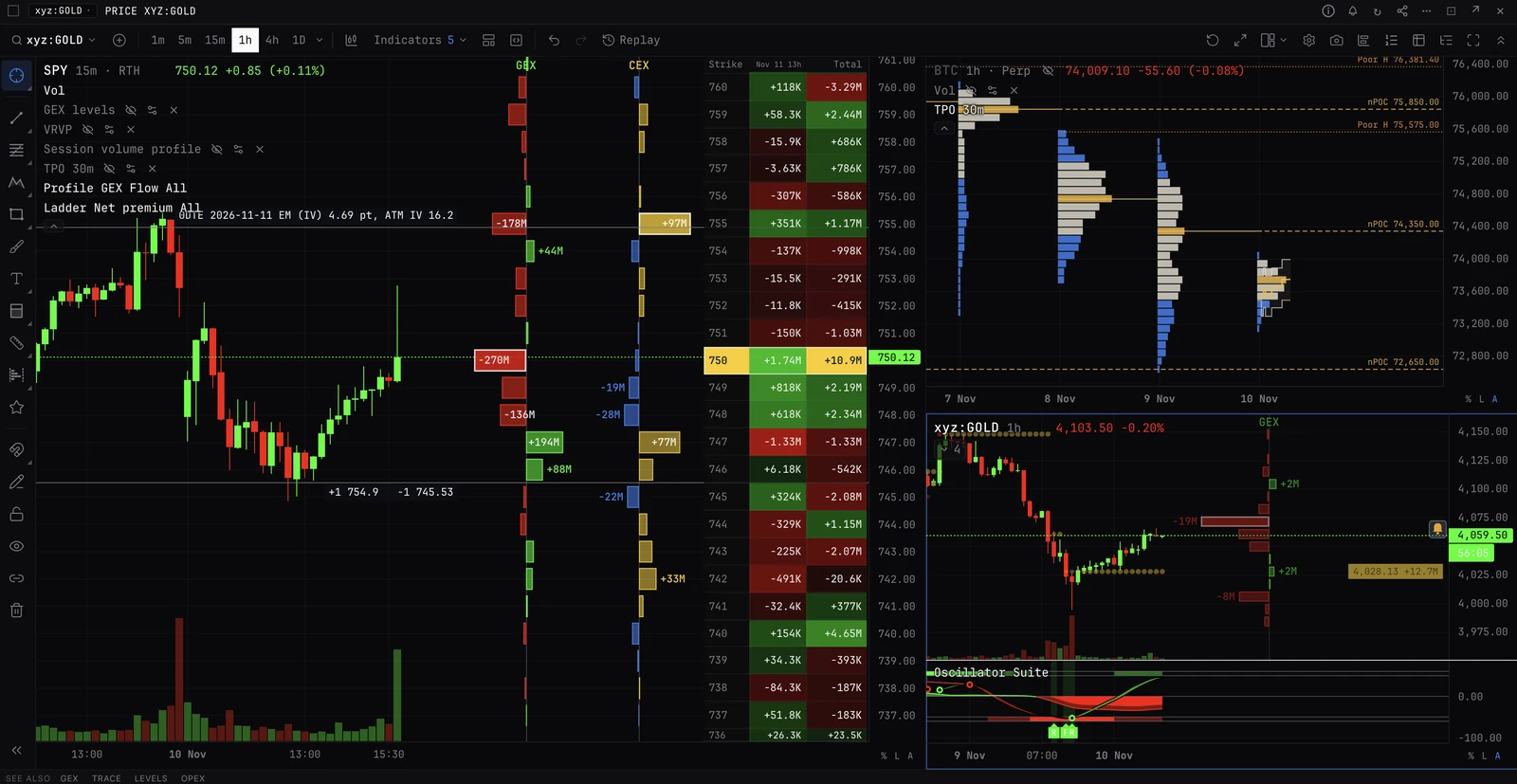
Dealer Positioning
The aggregate options book of market makers, who take the other side of customer trades and hedge what they hold. It can be estimated two ways: from open interest with an assumption that dealers are long calls and short puts (the standard convention), or measured from the trade tape, using each trade's aggressor side to see who bought and who sold. Reading dealer positioning tells you whether their hedging will dampen or amplify price action.
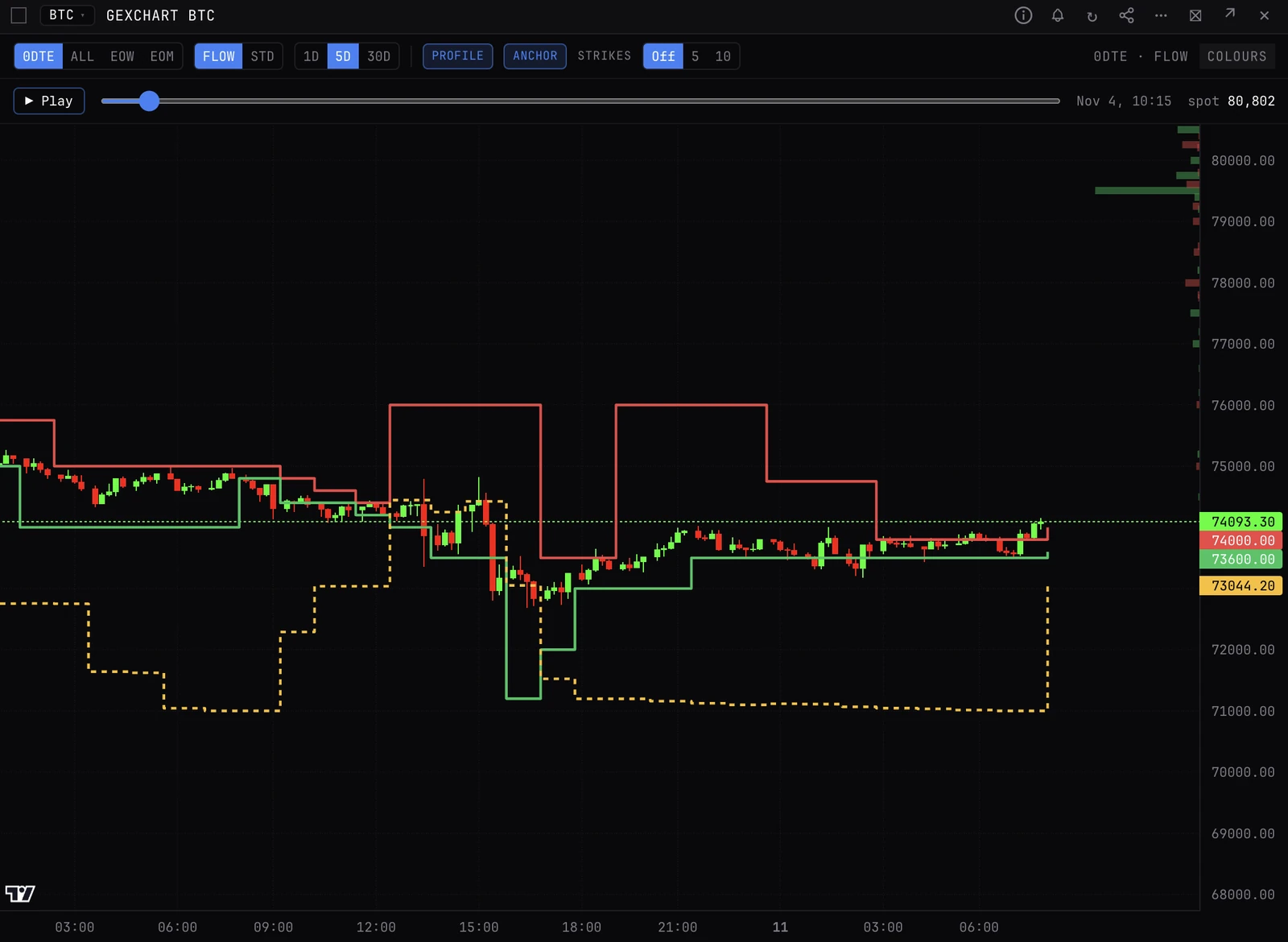
Related terms
AggressorThe side of a trade that crosses the spread to execute, removing liquidity from the book. A market buy that lifts the offer is an aggressive buy. CVD measures aggressors over time and is the cleanest tape-side read of who is in control.ETHEthereum, the second-largest crypto asset by market cap and the second-largest options market. ETH options track BTC closely but show distinct skew and term-structure dynamics, especially around protocol-level catalysts.HedgeA position taken to offset risk in another position. Long spot can be hedged by buying puts. A short call book is hedged by buying delta in the underlying. Hedging defines market-maker behaviour and is the mechanical reason gamma exposure matters.LongA position that profits when price rises. Buying spot, going long a perp, owning a call, or being short a put are all long positions. Opposite of short.Market MakerA participant that quotes both sides of the market continuously and earns the spread. In options, market makers also hedge their inventory in the underlying. Their hedging flow is the mechanical force behind gamma exposure effects.
See Dealer Positioning live on the terminal.
BackQuant is the analytics terminal for equity and crypto options. GEX walls, dealer positioning, options flow, and the full derivatives context - one product.